

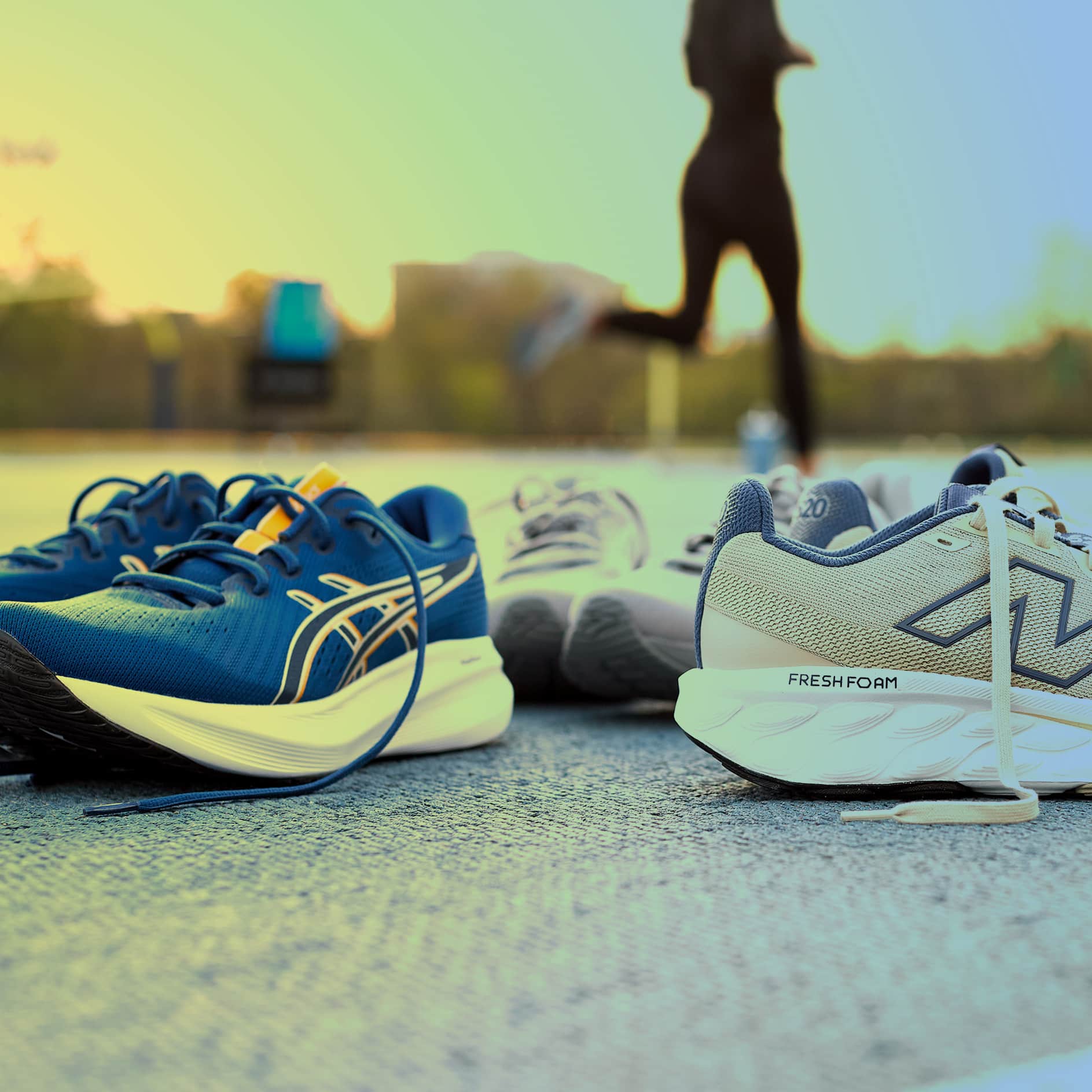
Complete Running Shoe Rotation: From First Run To Recovery
The Sole Summary
If you’re getting back into a running routine this fall, you’ve probably noticed something: running shoes have a language of their own.
Don’t worry, you don’t need a PhD in running shoes. You just need to know what each type of shoe is actually designed to do.
Think of it this way: you wouldn’t use a paring knife to chop a squash. Could you? Technically. Would it make the job easier? Absolutely not. Running shoes work the same way. Different runs put different demands on your feet, so having a few shoes with different strengths can make your training feel a whole lot better.
And don’t worry—you don’t need to become fluent in running-shoe jargon to figure out what those strengths are.
Let’s make it simple.
You don't necessarily need all four. For most runners, a three-shoe rotation can cover plenty of ground, while a dedicated race-day shoe can be the finishing touch if you're training for an event.
Here's how to build your ideal running shoe rotation.
The Daily Trainer: Your MVP
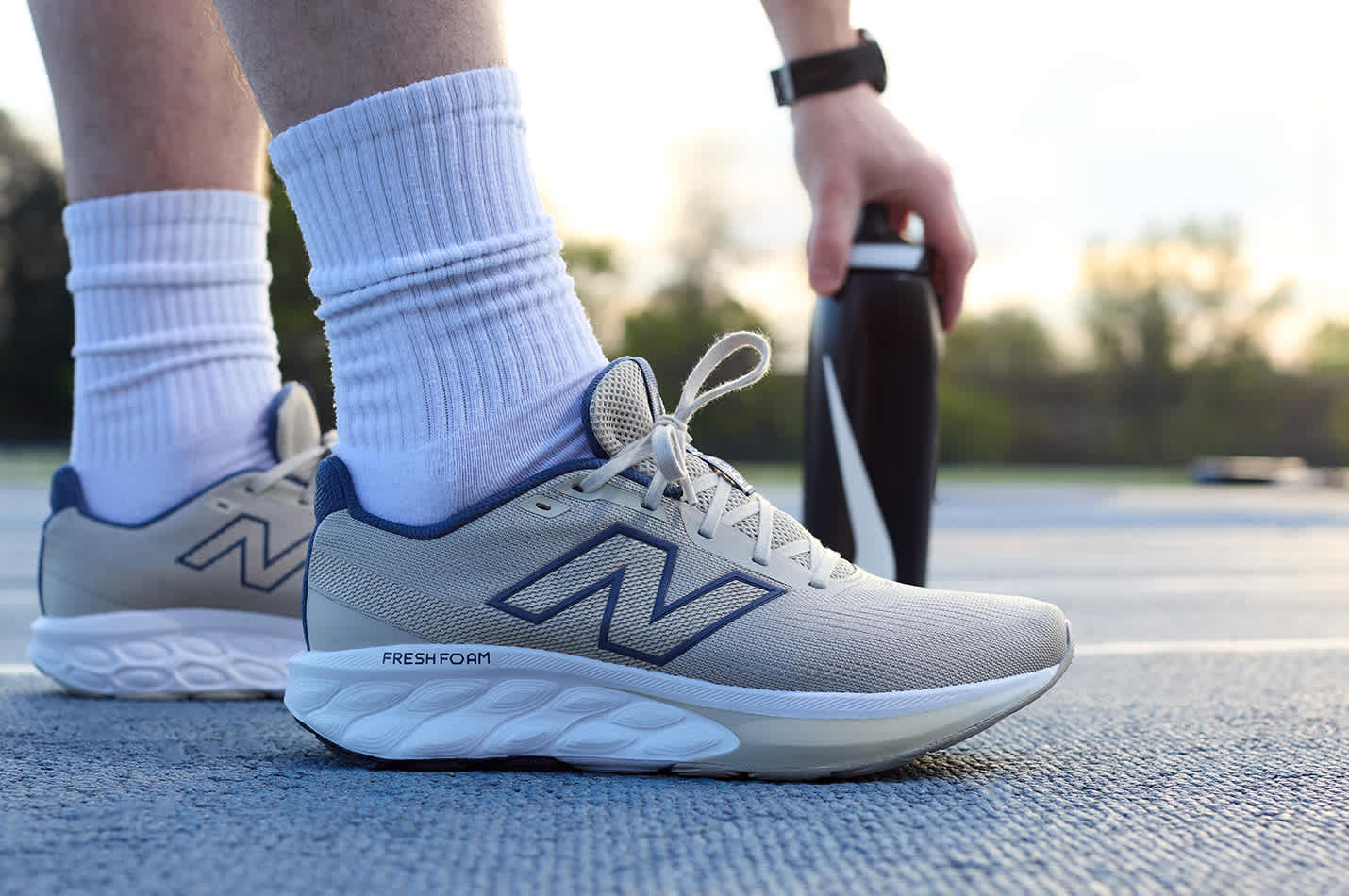
Why You Need It?
Every rotation needs a shoe that can show up and do the job. The Daily Trainer is exactly that.
It's the pair you grab for your morning miles, after-work run, treadmill session and those “I said I'd run three miles and somehow ended up doing five” days (supposedly, it happens). It's built for repetition, which means comfort and durability matter just as much as performance.
Translation: this is your “I don’t know what kind of run I’m doing yet” shoe. It needs enough cushioning to keep easy miles comfortable, enough responsiveness that your stride doesn’t feel sluggish, and enough durability to survive being your most-worn pair.
Unlike a specialized speed or race shoe, a daily trainer isn't trying to make you faster. It's trying to make you want to run tomorrow.
What to Look For?
- Balanced cushioning: essentially, this is the shoe’s shock absorption. More isn’t automatically better: it depends on what feels good to you and the kind of running you’re doing.
- Everyday durability: an outsole and midsole that can handle being your most-worn pair without giving up the ghost six weeks in.
- Comfortable, secure fit: a stable hold at the heel and midfoot with room for your toes—not a my-toes-are-being held-hostage snug, but secure enough that your foot isn’t sliding around.
- Stability: how supported and secure you feel as your foot moves through each stride. This shoe is carrying the bulk of your mileage; you don’t want to be thinking about what’s happening under your feet.
- Breathable uppers: keep things comfortable over longer runs. If you’re huffing and puffing during your run, your sneakers should be able to breathe, too.
Brands to Keep on Your Radar: Brooks, ASICS, Nike
The Speed Shoe: Pick Up the Pace
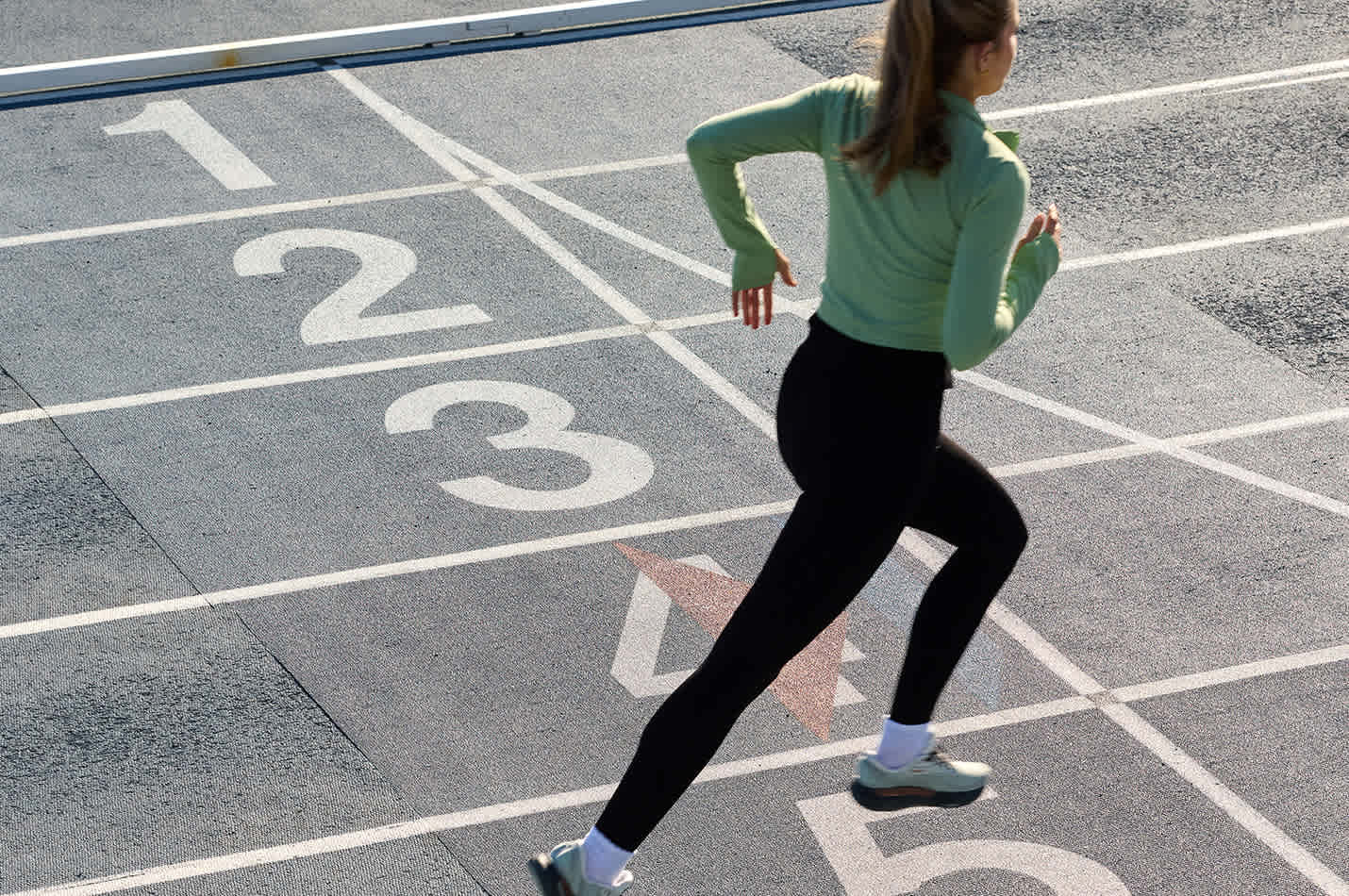
Why You Need It?
Your daily trainer is the reliable friend who always shows up on time. Your Speed Shoe is the friend who texts, “We’re leaving in five. Be ready.”
This is the shoe for intervals, tempo runs, hill repeats, and those workouts where your running app starts throwing around words like cadence and threshold and suddenly everyone sounds very serious.
Translation: you’re running faster than usual, so you want a shoe that feels like it can keep up.
A good speed shoe should feel like it wants to move. Look for a lighter construction, responsive cushioning, and a secure fit that keeps your foot locked in without feeling restrictive.
What to Look For?
- Responsive cushioning: In plain English? This is where “energy return” actually starts to matter. You want the shoe to feel like it’s giving some of your effort back instead of just absorbing it.
- Lightweight construction: you need something that won't weigh down your stride. It shouldn’t feel like extra baggage when you’re kicking it into high gear. Secure, locked-in fit: a snugger midfoot and secure heel can help your feet feel connected to the sole as you pick up the pace.
- Stability: feels precise and like you’re in total control. The goal is less about “extra support” and more about a better “connection”.
- Propulsive geometry: features like rocker designs or plates that can help you move smoothly through toe-off.
Brands to Keep on Your Radar: New Balance, Saucony, PUMA
The Race Day Performer: Bring Out the Big Guns
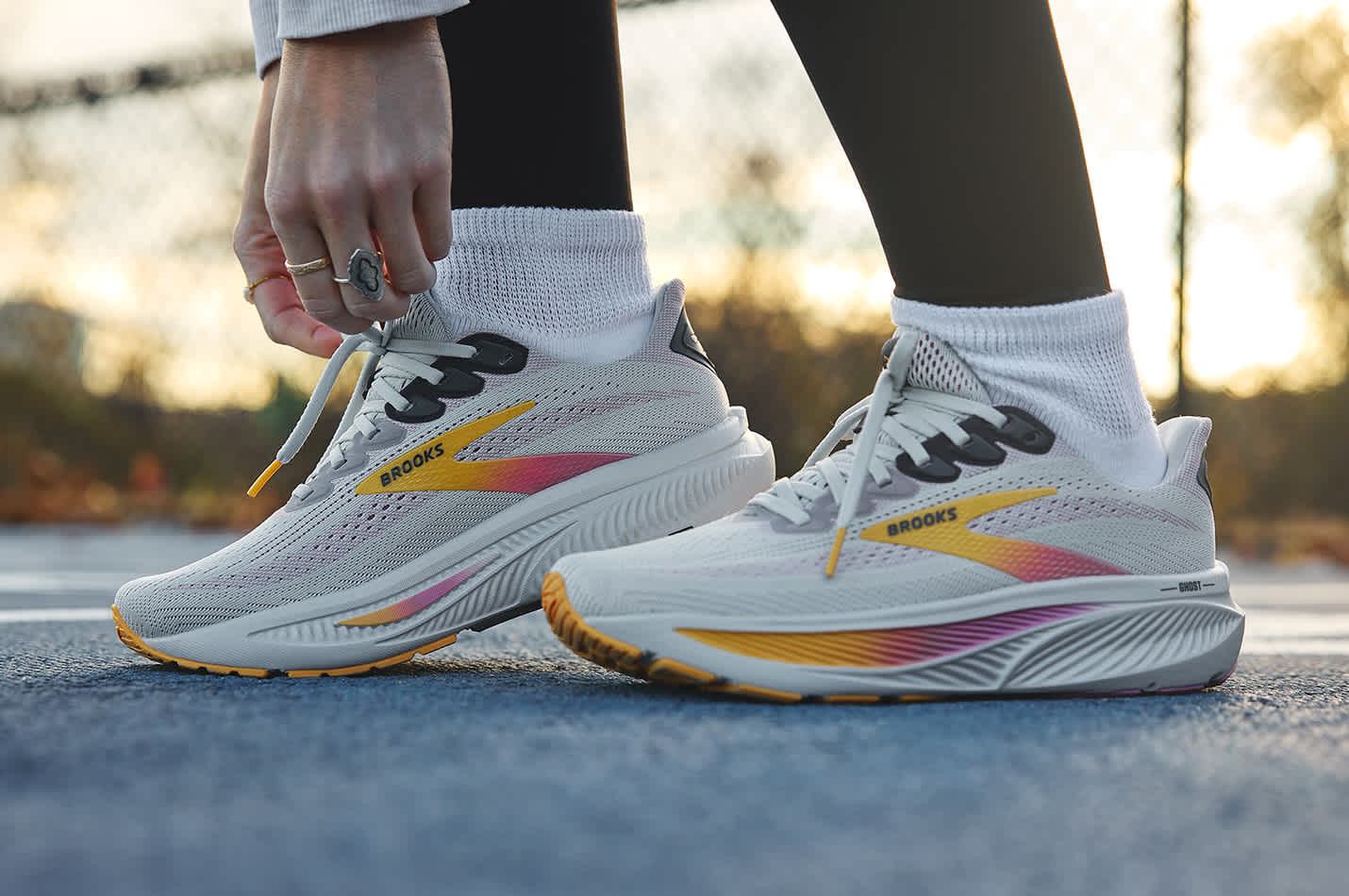
Why You Need It?
There are training runs, and then there are the runs you've been training for.
Race-day shoes are where running footwear can get a little…technical and every brand has their own patented-special-to-only-them mechanics. You may hear about carbon plates, rocker geometry, and energy return and wonder whether you accidentally walked into an engineering class.
You didn’t. You just need to know what those things are doing for you.
Whether you’re lining up for a 5K, a marathon or your first community fun run, a dedicated Race Day Performer is designed to help make the most of the miles you’ve put in.
Race-day shoes tend to prioritize lightweight construction, responsiveness, and efficiency through propulsive features.
What to Look For?
- Lightweight construction: don't confuse lightweight with barely there. The right amount of cushioning can make a faster workout feel considerably better, especially when you're putting in repeated efforts.
- Carbon plates: a stiff plate built into the midsole that can help create a more propulsive feeling through your stride. Think push forward, not magic speed button.
- Rocker geometry: a curved sole designed to help your foot transition from landing to toe-off more smoothly. Basically, the shoe helps keep things moving forward.
- Energy return: How much of that compressed cushioning feels like it comes back when you push off. The easiest way to understand it? A shoe that feels like it’s running with you, not holding you back.
But this part is critical: don’t make the race day the first day you wear them.
It should feel familiar before it’s important. If you’ve ever tried to break-in dress shoes AT a wedding, you’ll know what we’re talking about. Incorporate it into your training before your event so you know how it feels at different paces and, more importantly, that it agrees with your feet.
Brands to Keep on Your Radar: Brooks, New Balance, ASICS
The Recovery Shoe: Give Your Feet a Break
Why You Need It?
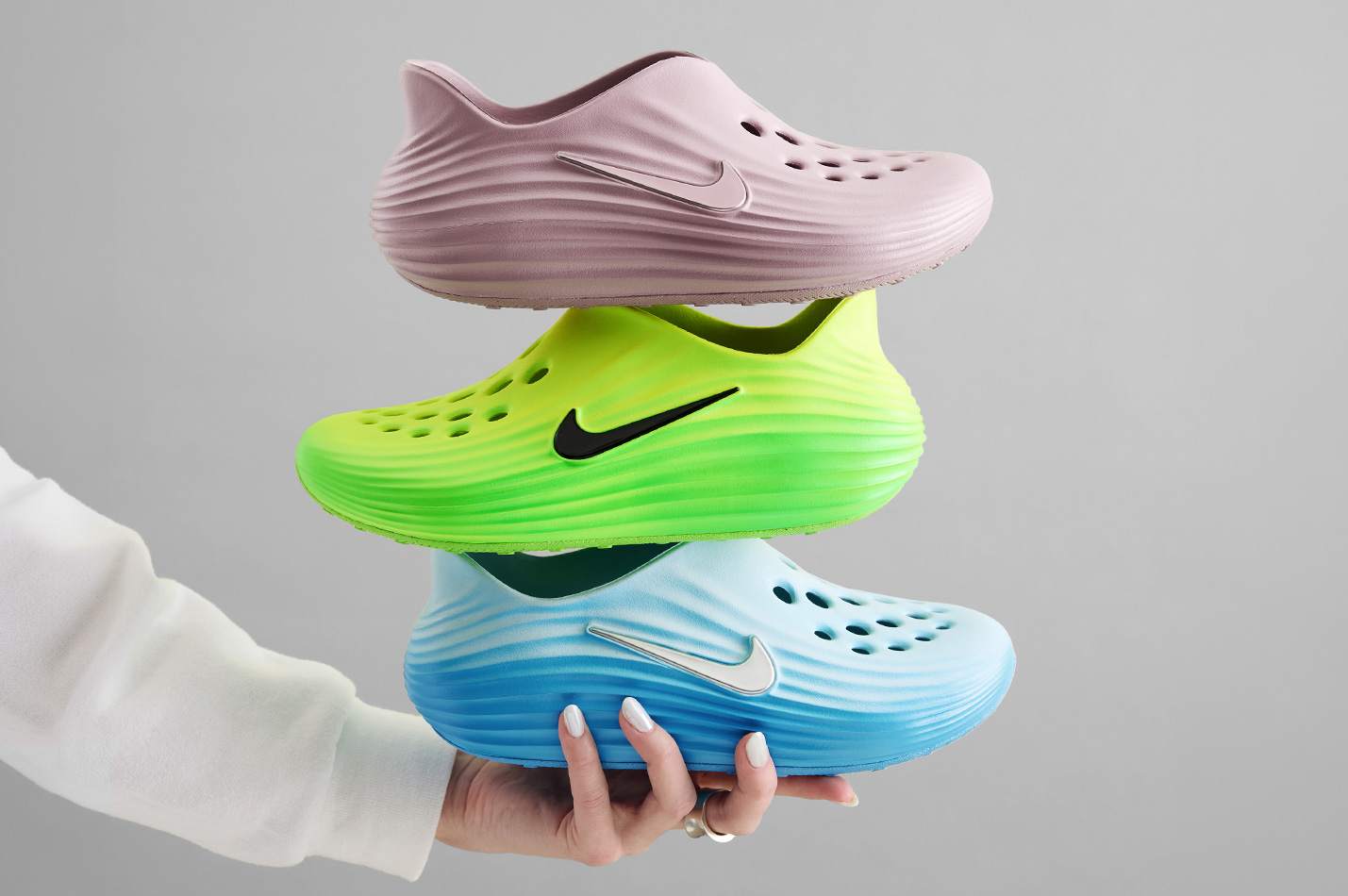
Maximum cushioning sounds technical. It really just means: give my feet a break.
You've put in the miles. Now it's time to give your feet a little something back.
The Recovery Shoe is the comfort specialist of your rotation. It's the pair you reach for after a long run, hard workout or particularly ambitious week when your legs are ready to clock out.
And don't limit recovery footwear to the finish line. These shoes can be just as useful for walking, errands or low-impact days when you want to stay moving without asking too much from your body.
This is not the shoe for proving anything. It’s the shoe for ordering the extra-large smoothie after your long run (that probably has more sugar than protein in it) and feeling absolutely no guilt about it.
The goal isn't performance. It's comfort.
What to Look For?
- Maximum cushioning: this is where it really counts. A soft, protective feel underfoot is one of those features you stop noticing because everything just feels better.
- A stable platform: helps absorb impact and make easy movement feel, well, easy.
- Soft, comfortable uppers: your feet have been through enough. It’s time to prioritize taking the pressure off.
- Rocker geometry: back again, but this time that curved sole can help your foot roll forward without requiring quite as much effort from tired legs.
- Lightweight construction: We cannot stress this enough: nothing in your workout rotation should ever feel like cement shoes (this isn’t the mafia). Remember, your recovery shoe shouldn't feel like a recovery workout.
Brands to Keep on Your Radar: Skechers, New Balance, adidas, Nike
Why Rotate Your Running Shoes?
Here's one more reason to give your favorite pair a break: your shoes need recovery time, too.
Rotating between multiple pairs gives midsole foam time between runs and distributes wear across your footwear rather than asking one shoe to absorb every mile you log. It can also give you the flexibility to choose a shoe based on the workout ahead instead of forcing one pair to do everything.
For many runners, three shoes are plenty: a daily trainer, a speed shoe and a recovery option. Training for a race? That's where a dedicated race-day performer can make sense as a fourth.
Think of it as building a team. Your daily trainer handles the everyday workload. Your speed shoe brings the energy. Your race-day shoe shows up when it counts. And your recovery shoe makes sure you're ready to do it all again.
Know When It's Time For A New Pair
Even the most hardworking running shoe has an expiration date.
Mileage is one way to keep tabs on your shoes, but it's not the only one. Pay attention to how they
feel—and whether they're starting to feel noticeably different from when you first brought them
home.
Watch out for:
- New aches or pains that weren't there before, particularly around the knees, shins or hips
- A "flat" or "dead" feeling underfoot
- Visible midsole creasing or compression
- Outsole rubber that's worn smooth in high-impact areas
- Mesh that's tearing or an upper that's losing its structure
- A heel counter that no longer feels supportive
If your shoes aren't feeling like themselves anymore, that's usually your cue that it's time to start looking for their replacement.
The Bottom Line
You don't need a closet full of running shoes to become a better runner. You just need to understand what each pair is designed to do.
A good rotation lets your shoes—and your feet—take turns doing the heavy lifting.
Because the goal isn't to own more shoes. It's to make every run count.
And once you find the right lineup? Well, there's only one thing left to do.
Lace up and go.